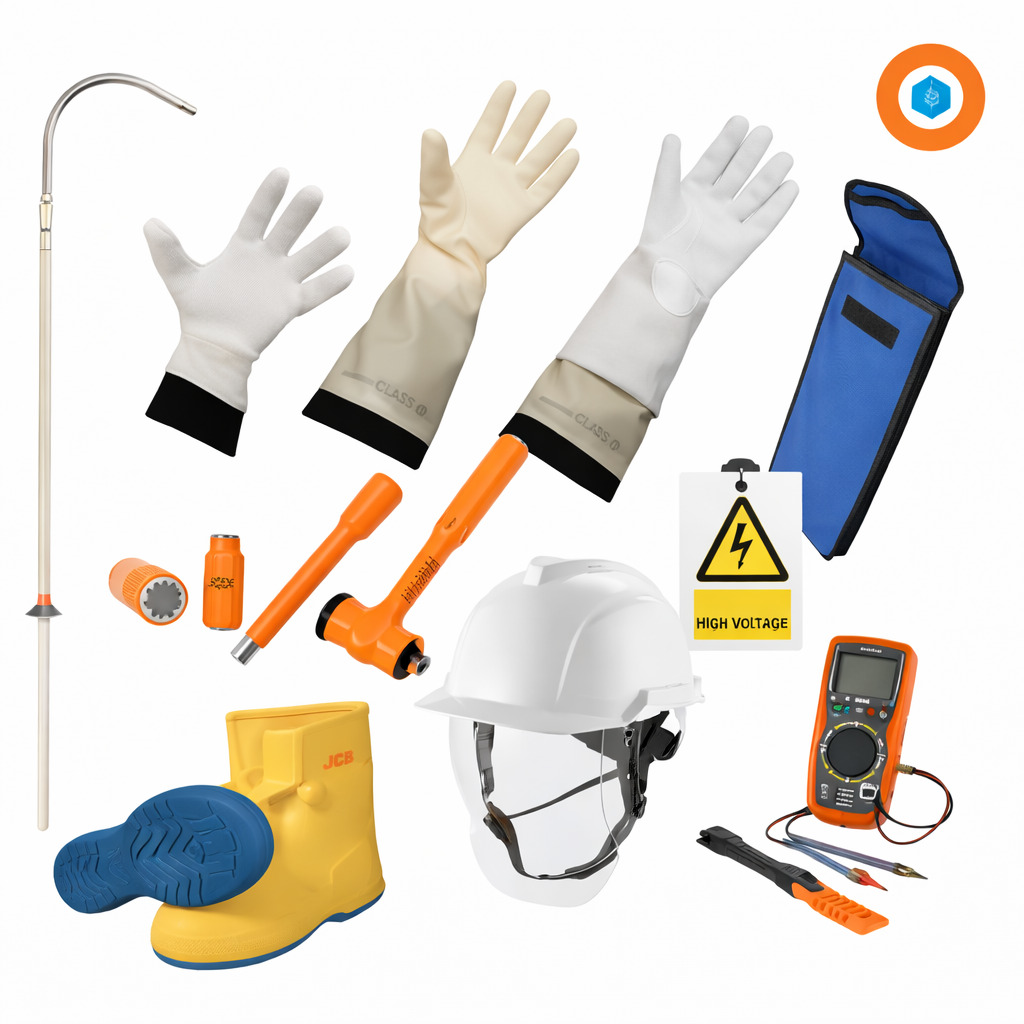
Working in extra-high-voltage (EHV/HV) facilities requires strict adherence to rigorous safety protocols and specialized protective equipment. In these installations, safe working distances from live conductors, severe arc flash levels, and high electromagnetic fields necessitate the use of safety measures specifically tested and certified for EHV conditions.
Netzer A.L. Electrical Engineering supplies extra-high-voltage safety equipment for construction and maintenance crews in substations and transmission lines. Our product range is tailored for operations in 161kV and 400kV facilities, selected in full compliance with standard requirements, accepted safety regulations, and the operational specifications customary in large-scale infrastructure projects.
Temporary Grounding Kits for Extra High Voltage Grounding and short-circuiting systems engineered to withstand high short-circuit currents, specifically designed for busbars and transmission conductors.
Insulating Sticks (HV/EHV) Insulated operating sticks, including telescopic hot sticks, ensuring safe operations while maintaining the required clearance distances in EHV facilities.
EHV Voltage Detectors Non-contact testing equipment designed to verify the presence of voltage, featuring visual and audible indicators optimized for rugged field conditions.
Personal Protective Equipment (PPE) Arc-rated suits, insulating gloves, dielectric mats, and ancillary protective accessories engineered for substation environments.
Netzer partners with world-leading international manufacturers specializing in high-voltage safety equipment, including:
Sofamel
Derancourt
Teknolabor
Avtron
Selecting safety equipment for extra-high-voltage systems demands precise alignment with voltage levels, anticipated short-circuit currents, and site characteristics. The Netzer team assists in defining the required equipment specifications based on project data and operational protocols, in close coordination with the relevant professional authorities.
Project completion time varies depending on the nature and type of the project, the specific equipment required, and the scope of custom tailoring needed.
We are fully committed to meeting strict schedules. Following a precise characterization of your requirements, we provide a realistic and binding timeline, while constantly striving for the fastest possible delivery.
Absolutely, professional engineering consulting is an integral part of our service. We begin every project with an in-depth assessment of the requirements and infrastructure by expert engineers, ensuring the selection of the correct equipment and precise engineering customization to prevent future malfunctions.
Yes. All the equipment we import and supply complies with both Israeli and international standards and comes with a manufacturer’s warranty. We strictly work with world-leading suppliers to guarantee the highest level of quality and reliability.
You can contact us in the following ways: by phone at [insert phone number], by email at [email protected], or by using the contact form on our website. We are always available for guidance and professional inquiries.
Want to talk to us? Via WhatsApp or phone – we are here for you.
04-6592244
balfuria village


